Kitchen Exhaust Hood Cleaning
Professional commercial kitchen exhaust hood cleaning for restaurants and food service facilities, addressing grease buildup and maintaining fire code compliance.
Every commercial kitchen with a cooking line generates grease-laden vapor, and every bit of it has to pass through the exhaust hood on its way out of the building. Over time that grease settles inside the system — on the hood surfaces, inside the plenum, on the filters, along the ductwork, and around the rooftop fan. It’s not just a cleanliness issue. NFPA 96, the national standard for commercial kitchen ventilation, exists specifically because grease buildup inside an exhaust system is one of the leading causes of restaurant fires, and it’s the single most common reason kitchens fail fire inspections.
What a full cleaning covers
We clean the complete exhaust run, not just the parts of the hood you can see from the kitchen floor:
- Hood and plenum — the interior surfaces where grease first collects
- Filters — baffle or mesh, removed, degreased, and reinstalled correctly
- Ductwork — the full vertical and horizontal run between the hood and the roof, where grease tends to build up fastest since it’s the hardest section to reach
- Rooftop exhaust fan — including the fan housing and the roof surface directly around it, which often gets overlooked by cleaners who stop at the duct opening
Grease accumulates fastest in the sections you can’t see from inside the kitchen — the ductwork and rooftop fan — which is exactly why a cleaning that only touches the visible hood surface doesn’t actually get you back into compliance.
How often does it need to happen?
NFPA 96 ties cleaning frequency to how much your kitchen actually cooks and what fuel type you use — monthly for solid-fuel cooking, quarterly for high-volume operations (think 24-hour diners or high-turnover restaurants), semi-annually for moderate-volume kitchens, and annually for lower-volume operations. We’ll walk your kitchen and help you figure out where you actually fall, rather than defaulting you into a schedule that’s either overkill or not enough.
What to expect on service day
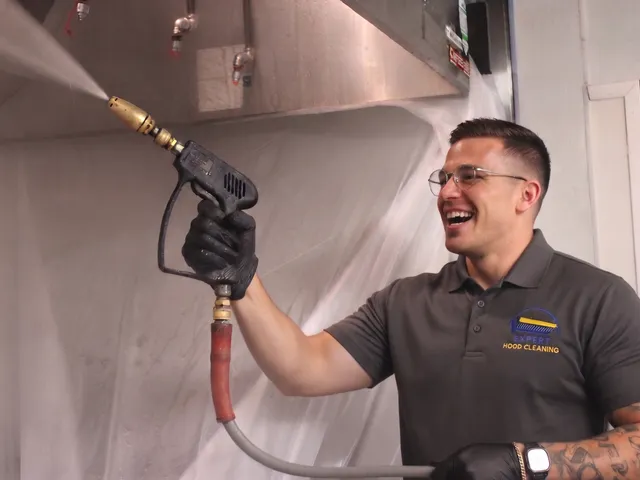
Our technicians access the hood, ductwork, and rooftop fan, remove and degrease the filters, and clean every interior surface down to bare metal — not just wiped down, but scraped and washed until the grease is actually gone. We work around your kitchen’s hours when possible, including early morning, overnight, and weekend scheduling, so cleaning doesn’t mean closing.
Documentation you can actually use
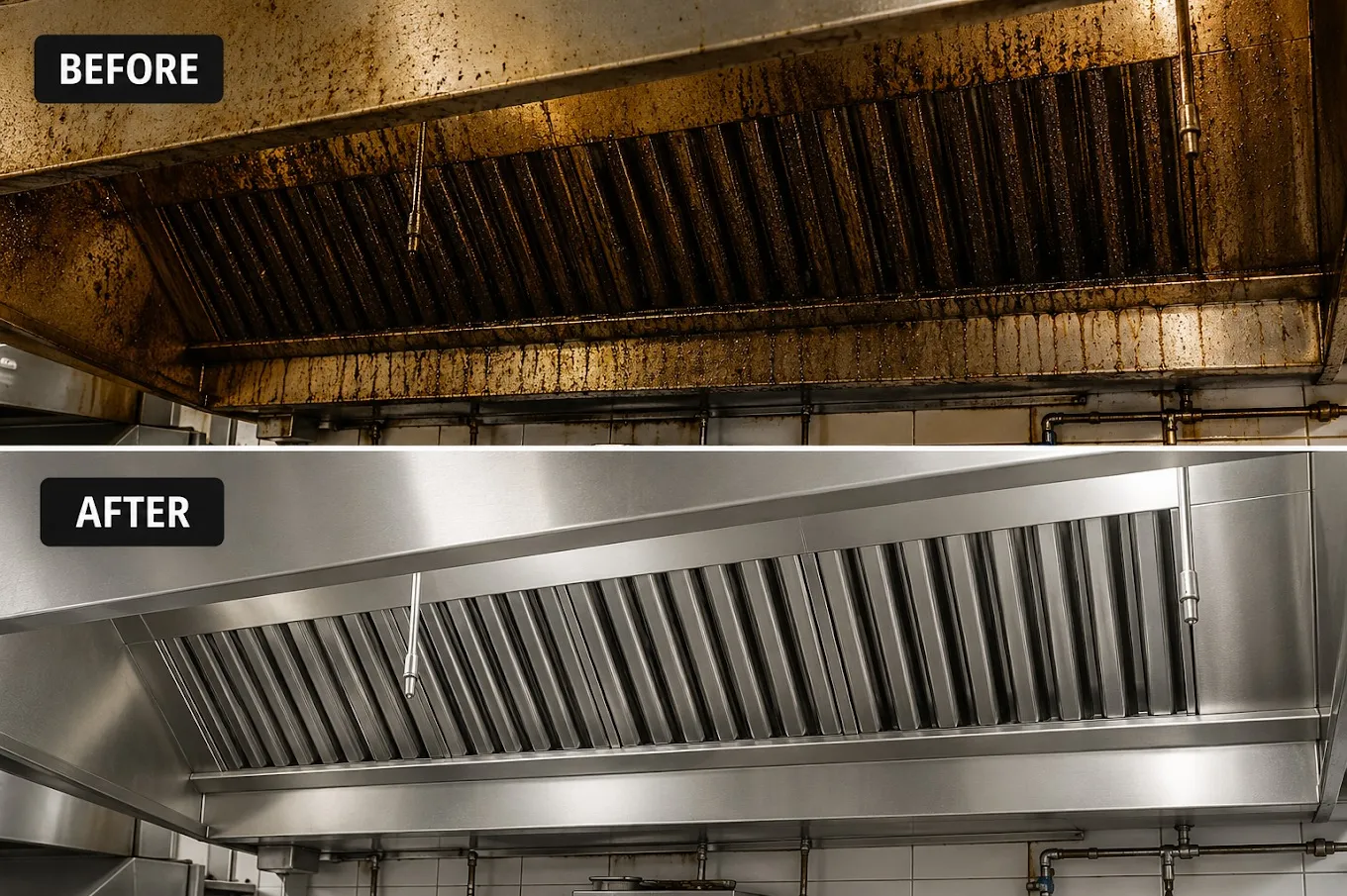
Every cleaning comes with before-and-after photos and a signed service certificate. That’s not just a formality — it’s what your fire marshal, health inspector, or insurance carrier will ask to see, and it’s proof the job was done to the visible-metal standard rather than a quick surface wipe.
Who this is for
Restaurants, hotel kitchens, hospital and senior living facility kitchens, school and university cafeterias, corporate dining, and catering operations — any commercial kitchen with a grease-producing cook line needs this on a schedule, not just when something looks obviously dirty. If it’s been a while since your last cleaning, or you’re not sure when your last one even was, that’s usually the first sign it’s time.
How It Works
Book Your Service
Contact us to schedule a time that works for your kitchen.
Inspection & Assessment
Our certified technicians inspect the system to confirm exactly what it needs.
We Get to Work
We complete the job to NFPA 96 and local fire code standards.
Documentation & Compliance
You receive proper documentation showing the work is code-compliant.
See The Difference
Grease-caked to bare metal — every cleaning is finished to a standard your fire marshal, health inspector, and insurance carrier will actually accept.
Frequently Asked Questions
How often does a commercial kitchen exhaust hood need to be cleaned?
NFPA 96 ties frequency to cooking volume and fuel type — monthly for solid-fuel cooking, quarterly for high-volume or 24-hour kitchens, semi-annually for moderate-volume kitchens, and annually for low-volume operations like churches or seasonal kitchens.
What's actually included in a full hood cleaning?
The hood and plenum, baffle or mesh filters, the full ductwork run, and the rooftop exhaust fan and housing — cleaned to bare metal, not just wiped down.
Will hood cleaning shut down my kitchen?
No — we work around your hours, including early morning, overnight, and weekend scheduling, so a cleaning doesn't mean closing.
What proof do I get that the cleaning was actually done?
Every cleaning comes with before-and-after photos and a signed service certificate — the documentation a fire marshal, health inspector, or insurance carrier will ask to see.
Ready to Schedule This Service?
Serving Charlotte, NC & SC — 24/7 availability.
Ready to Get Started?
Free estimates — call 980-384-7357 or request a quote online.